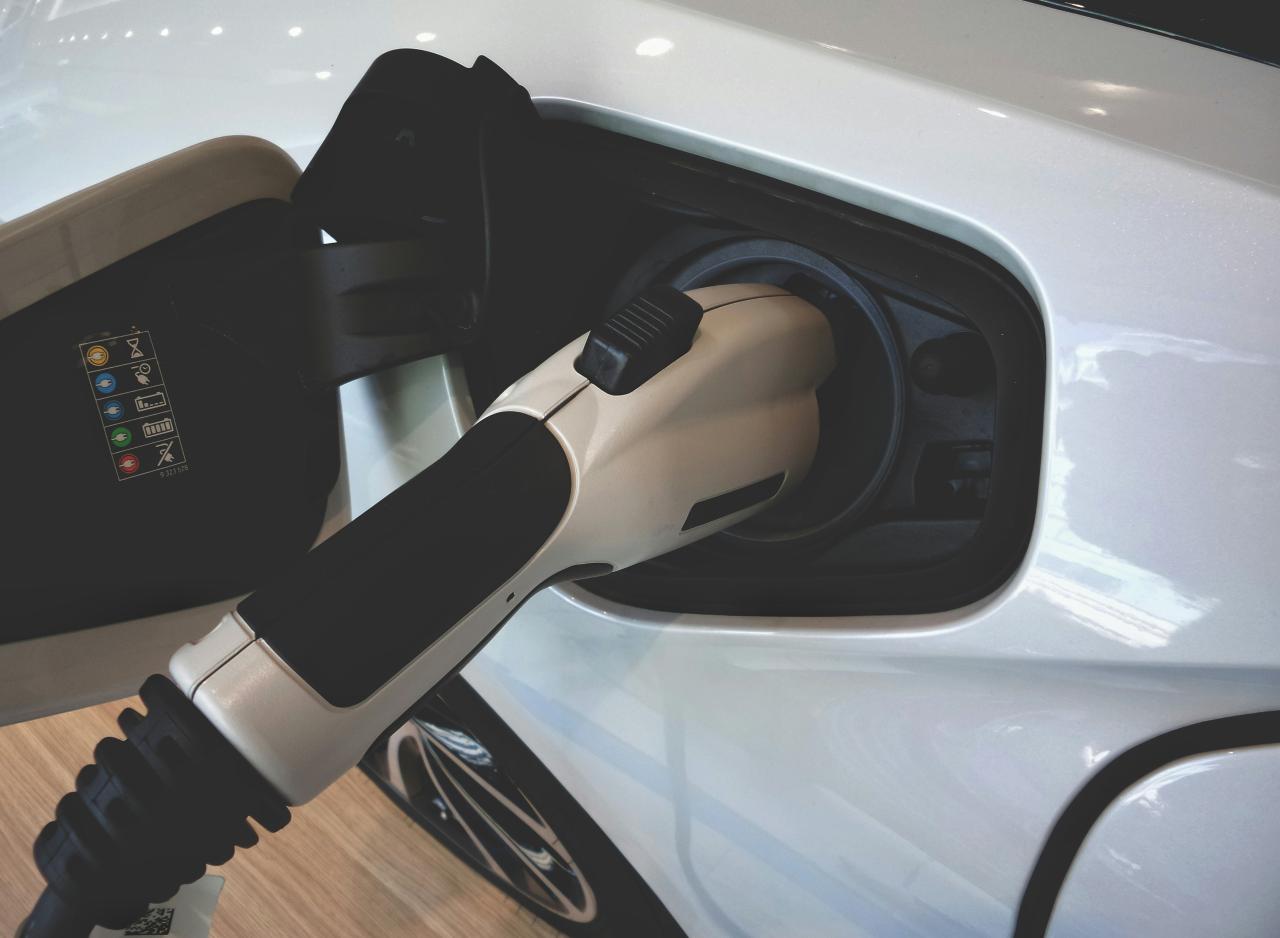
The spectacular rise of the Electric Vehicle (EV) over the past decade has fundamentally reshaped the global automotive landscape, yet the widespread adoption of battery-powered transport still faces significant, deeply rooted technological and psychological barriers, chief among them being the enduring limitations of the current generation of liquid lithium-ion batteries—a technology originally designed for portable consumer electronics that now struggles under the demands of long-haul driving and rapid charging cycles.
Consumers frequently cite “range anxiety,” the fear of running out of power far from a charging station, as a primary deterrent to purchasing an EV, a valid concern that directly stems from the energy density limits of conventional lithium-ion cells, which simply cannot store enough energy without adding prohibitive weight and occupying excessive vehicle space.
Furthermore, the inherent design of these batteries, which relies on a flammable liquid electrolyte to shuttle ions between electrodes, introduces unavoidable safety concerns related to thermal runaway and fire risk, demanding complex, heavy, and costly cooling systems that further reduce overall vehicle efficiency and add to manufacturing complexity.
The technological answer to these persistent constraints, a true holy grail of energy storage research, is the Solid-State Battery (SSB), a revolutionary next-generation cell that replaces the volatile liquid electrolyte with a solid, non-flammable material, promising to unlock previously unattainable levels of energy density, significantly reduce charge times, and permanently address the critical safety and packaging issues currently slowing the electric mobility transition.
Pillar 1: Understanding the Solid-State Difference
Defining what a Solid-State Battery is and how it fundamentally changes lithium-ion technology.
A. The Core Lithium-Ion Problem
The limitations of the current battery standard.
-
Liquid Electrolyte: Conventional batteries rely on a liquid organic solvent electrolyte that is flammable, requiring extensive safety housing and cooling systems (the Battery Management System).
-
Dendrite Growth: During rapid charging, lithium ions can form needle-like structures called dendrites on the anode, which eventually pierce the separator, causing short circuits and safety hazards.
-
Low Energy Density: The bulky components, including the liquid electrolyte and thick separators, limit the amount of energy that can be packed into a given volume, constraining EV driving range.
B. The Solid-State Solution
The replacement of the liquid electrolyte with a solid.
-
Solid Electrolyte: An SSB replaces the liquid solvent with a solid, non-flammable material (e.g., ceramics, polymers, or sulfides) that still conducts lithium ions effectively.
-
Eliminating Volatility: Because the electrolyte is solid, the battery is inherently safer and non-flammable, allowing manufacturers to remove much of the complex, heavy cooling and safety packaging.
-
Dendrite Resistance: The solid material acts as a physical barrier against dendrite growth, allowing for safer, faster charging and potentially enabling the use of pure lithium metal anodes.
C. The Game-Changing Component: Lithium Metal Anodes
Unlocking maximum energy storage potential.
-
Current Anodes: Standard lithium-ion batteries use graphite or silicon-based anodes, which can only store a finite number of lithium ions, limiting energy density.
-
Pure Lithium Anodes: The stability of the solid electrolyte makes it possible to use pure lithium metal as the anode material, which is the lightest metal and boasts the highest theoretical energy density.
-
Energy Density Leap: By switching to a lithium metal anode, SSBs have the potential to achieve energy densities up to 50% higher than the best current commercial lithium-ion cells, directly translating to much longer EV ranges.
Pillar 2: The Three Major Advantages for Electric Vehicles
How SSBs fundamentally solve the primary issues plaguing EV adoption.
A. Extended Driving Range (Density)
Solving the core “range anxiety” problem.
-
Lighter Battery Packs: The higher energy density means less battery mass is required to achieve a target range (e.g., 500 miles), reducing the overall vehicle weight, which improves efficiency and handling.
-
Longer Range, Same Size: Alternatively, manufacturers can fit significantly more range (e.g., 600 miles) into the same physical space and weight constraint as a current 300-mile battery pack.
-
Mass Market Appeal: The ability to offer EVs with gasoline-car-like refueling times and driving ranges removes the final psychological barrier for the vast majority of consumers, accelerating mass adoption.
B. Ultra-Fast Charging Capability (Kinetics)
Matching the convenience of gasoline fill-ups.
-
Dendrite-Free Charging: The solid electrolyte’s resistance to dendrite formation allows for much higher charging currents to be safely pushed into the battery without fear of internal damage or thermal runaway.
-
10-Minute Recharge: Leading developers project that SSBs will enable charging speeds that restore 80% of the battery’s charge in 10 minutes or less, effectively matching the time needed for a typical fuel stop.
-
Infrastructure Efficiency: Faster charging speeds reduce the time a vehicle occupies a charging stall, meaning fewer stalls are needed to service the same number of vehicles, greatly improving the efficiency of public charging infrastructure.
C. Enhanced Safety and Durability (Stability)
Simplifying design and increasing longevity.
-
No Thermal Runaway: The non-flammable nature of the solid electrolyte drastically reduces the risk of thermal runaway and fire, simplifying crash safety design and making the EV inherently safer.
-
Simplified Cooling: The robust thermal performance means cooling requirements are significantly reduced, allowing manufacturers to eliminate heavy liquid cooling systems and complex venting mechanisms, cutting vehicle cost and weight.
-
Longer Cycle Life: Some solid electrolytes demonstrate greater resistance to chemical degradation over time and usage cycles compared to liquid electrolytes, promising a longer operational lifespan for the battery and the vehicle itself.
Pillar 3: The Technological Hurdles to Mass Production
Identifying why SSBs are not yet in every new electric vehicle.
A. Interface Resistance (The Solid Contact Problem)
Getting solids to play nicely at a molecular level.
-
Contact Challenges: Achieving good ionic contact between two solid materials (the solid electrolyte and the electrodes) is incredibly difficult, as any gap significantly increases internal resistance and reduces performance.
-
Pressure Requirement: Many SSB prototypes require intense external pressure to maintain solid-to-solid contact, adding complexity and bulk to the overall battery pack design, which negates the density benefits.
-
Swelling and Shrinkage: As the battery charges and discharges, the electrodes expand and contract in volume, making it challenging to maintain the necessary consistent, low-resistance interface over thousands of cycles.
B. Manufacturing Scale and Cost
The challenges of shifting from lab bench to gigafactory.
-
Novel Materials: Many of the most promising solid electrolytes (e.g., certain sulfides) require entirely new, complex manufacturing processes that are incompatible with existing lithium-ion gigafactories, requiring massive capital investment.
-
Yield and Quality: Producing the solid electrolyte layers consistently and defect-free at large scale is extremely challenging; even tiny imperfections can lead to short circuits in the final cell, driving down manufacturing yield.
-
Cost Parity: Currently, manufacturing costs for SSBs are significantly higher than those for established liquid-ion technology; achieving the cost parity necessary for mass market vehicles remains a major developmental hurdle.
C. Electrolyte Stability and Durability
Finding the perfect balance of performance and long life.
-
Chemical Stability: Some promising solid electrolytes are highly sensitive to air and moisture, requiring them to be manufactured in extremely dry, expensive environments, complicating production logistics.
-
Ionic Conductivity: For an EV battery to charge and discharge quickly, the solid electrolyte must exhibit ionic conductivity comparable to or better than a liquid at various operating temperatures, a property that is difficult to achieve consistently.
-
Low Temperature Performance: The performance of many solid electrolytes degrades noticeably at low temperatures, which is a critical issue for drivers in colder climates and requires further engineering solutions.
Pillar 4: The Competitive Global Landscape
Highlighting the key players and their strategic timelines.
A. Automotive OEMs Leading the Charge
Car manufacturers who are heavily invested in the technology.
-
Toyota’s Ambition: Toyota is a long-standing leader in solid-state patents and aims to commercialize a solid-state powered vehicle, focusing heavily on sulfide-based electrolytes and aiming for a production debut in the mid-2020s.
-
Volkswagen’s Partnership: Volkswagen has invested heavily in QuantumScape, a U.S.-based startup focused on a ceramic-based solid-state separator, with the goal of integrating the technology into their premium EV lineup quickly.
-
Ford and BMW: Both companies have partnered with the U.S. startup Solid Power to develop and integrate their solid-state cell technology into future generations of their electric models, diversifying their risk across multiple platforms.
B. Specialist Battery Startups
The innovative companies pushing the boundaries of material science.
-
QuantumScape: Known for its single-layer, anode-free design that simplifies the cell structure and promises extremely fast charging and high density.
-
Solid Power: Focused on a sulfide-based chemistry which is known for its high ionic conductivity, seeking to leverage existing manufacturing techniques where possible to speed up scaling.
-
Factorial Energy: Exploring polymer-based solid electrolytes which are often easier to handle and process in large volumes, offering a potentially cheaper path to mass production.
C. Government and Academic Research
The role of public institutions in foundational breakthroughs.
-
Funding Initiatives: Government agencies in the U.S., EU, China, and Japan are funding massive academic and national lab initiatives to solve the foundational material science problems related to solid electrolyte conductivity and stability.
-
Standardization Efforts: Academic research often focuses on establishing testing protocols and standardizationfor solid-state performance metrics, which is crucial for industry-wide adoption and comparison.
-
Talent Pipeline: Universities are training the next generation of electrochemical engineers and material scientists needed to scale the complex manufacturing processes required for solid-state cells.
Pillar 5: The Expected Impact on the EV Ecosystem
Looking beyond the battery to the wider transformation of electric mobility.
A. Vehicle Design and Packaging Revolution
Giving designers new freedom and flexibility.
-
Structural Batteries: The safety and stability of SSBs allow them to be integrated directly into the vehicle chassis (cell-to-chassis design) without the need for bulky, fire-resistant modules, increasing structural integrity and saving weight.
-
Smaller Footprint: Because of the higher energy density, the battery pack can be physically smaller for a given range, freeing up valuable cabin and storage space for passengers and luggage.
-
Simplified Manufacturing: The elimination of complex liquid cooling and safety systems reduces the overall complexity of the EV’s underbody assembly, potentially lowering the final manufacturing cost of the vehicle.
B. Infrastructure and Grid Optimization
The positive ripple effects on the charging landscape.
-
Faster Throughput: The ultra-fast charging capability of SSBs means that charging stations can serve more vehicles per hour, increasing throughput and potentially reducing the total capital investment needed for a widespread public network.
-
Less Stress on the Grid: While charging is fast, the charging peaks can be managed intelligently by smart charging systems, ensuring that sudden high-demand spikes from many vehicles charging at once do not destabilize the local electrical grid.
-
Station Density: With longer ranges, drivers may charge less frequently, which allows infrastructure developers to strategically place fewer, but higher-powered, charging stations at optimal long-haul locations.
C. Future Evolution and Sustainability
The path to fully sustainable energy storage.
-
Recyclability Potential: The stable, often inorganic components of solid electrolytes may simplify the recycling process compared to separating flammable liquid components, making the battery lifecycle more sustainable.
-
Beyond Lithium: The research paves the way for future, even higher-density chemistries, such as lithium-sulfur or sodium-ion batteries, which could eventually utilize more abundant and less costly raw materials.
-
Long-Term Goal: SSBs are a crucial step toward achieving the circular economy for batteries, where material consumption is minimized and resource recovery is maximized, aligning electric mobility with strict environmental targets.
Conclusion: The Defining Technology of the EV Era
Solid-State Battery technology represents a generational leap forward in energy storage capability, addressing the most significant limitations that currently impede the complete and inevitable transition to electric vehicles.
The revolutionary replacement of the traditional volatile liquid electrolyte with a stable solid material fundamentally unlocks unparalleled levels of safety, allowing manufacturers to drastically simplify the complex cooling and safety housing requirements.
Crucially, the inherent stability of the solid-state design makes possible the use of high-capacity lithium metal anodes, which promise to deliver up to 50% greater energy density compared to the best conventional lithium-ion batteries.
This massive jump in energy density directly translates into the ability to produce electric vehicles with greatly extended driving ranges, finally overcoming the pervasive consumer concern known as range anxiety.
Furthermore, the physical resistance of the solid electrolyte to dendrite formation enables charging rates that can replenish 80% of the battery capacity in 10 minutes or less, effectively matching the convenience of stopping at a traditional gas station.
While significant engineering and manufacturing challenges remain, particularly related to scaling production and maintaining low internal resistance across thousands of usage cycles, the global automotive and technology industries are united in their pursuit of this solution.
The successful commercialization of Solid-State Batteries will not only redefine the performance and safety standards of electric vehicles but will also catalyze a profound transformation in vehicle design and public charging infrastructure, securing the ultimate, irreversible victory for sustainable electric mobility.